
Give your agent a goal. Get back an opportunity, a number, and a verdict.
Say where you want the business to get to. Docsbook researches what is actually there, sizes the opportunity from evidence, and turns it into experiments that each carry a number they are expected to hit — then reads, on the date, whether they hit it. It runs inside the agent you already use, and everything it writes lands in your own repository as a commit you review.
Paste one prompt into Claude Code, Cursor, Codex or any client that speaks MCP. It connects the server itself, writes a Docsbook rule into its own memory file, and takes a first project live.
"More qualified organic traffic." Read as clicks and impressions per intent.
"Be named when assistants answer my category." Read as citations across a fixed question set.
"Make more readers reach the product." Read as goal completions per page.
"Reach people in another language." Read as traffic and rank per locale.
The loop, in eight stages#
The stage most tools skip is the fifth: writing down what should change, and by when, before doing the work. Without it the seventh stage has nothing to compare against.
One sentence from you — the outcome you want, not a brief or a backlog.
Six classes of evidence: what your product does, the demand around it, who ranks for it, what assistants answer, what your readers searched for and did not find.
One row per thing people look for: how many of them, what your docs show them today, who gets the click instead, and what winning it is worth.
Competing ways to take the same opportunity, each argued from the readings rather than from a checklist.
The number it is expected to hit and the date it will be read on — written down before any page exists.
The change is written into your repository as a commit or a pull request you review like any other.
On the date, the reading is taken and compared with the number written beforehand. Confirmed or rejected.
A rejection counts: what it eliminated is kept, so the next bet does not repeat it.
The experiments run on documentation because it is the surface an agent can change without asking anyone for access, and the one whose effect is readable from outside — search indexes it, assistants quote it, buyers decide on it, and every page reports its own traffic, referrals and failed searches.
The surface they run on#
Four stages, and an experiment can be read at any of them. Pick the one you are asking about.
- 1Publish
Source to a public URL, in about five minutes.
- 2Get found
What ships for search engines without configuring anything.
- 3Get quoted
What makes a passage an assistant can cite.
- 4Measure
Which pages were read, and where readers stopped.
Start in one conversation#
There is no signup flow in front of it. Point the agent you already work in at one endpoint and say where you want to go.
claude mcp add --transport http docsbook https://docsbook.io/api/mcp/serverCodex, Cursor, Windsurf, Cline and any other MCP client use the same endpoint — see MCP server for each. Would rather see the surface first? Publish a site in about five minutes.
What Docsbook does, and what it costs
Source to public URL
Workspace, balance, indexing
The jobs teams hire docs for
The evidence rule every page follows
Connect the agent you already use
Every tool and its price class
SKILL.md files any agent can load
The graph an agent navigates
Auth model and token scopes
Create and manage a site
Sources, indexing, GitHub link
Name, colour, fonts, layout
One CNAME, SSL automatic
Shared password or your own SSO
15 languages, indexed separately
What is metered, and what is not
Cost, sync, privacy, data ownership
Call your docs chat from your backend
Event catalogue and payload schemas
Cards, steps and callouts in Markdown
What shipped, and what it was meant to buy
AI search, docs SEO, comparisons
Documentation running on Docsbook#
Every site below is live and readable without signing in.
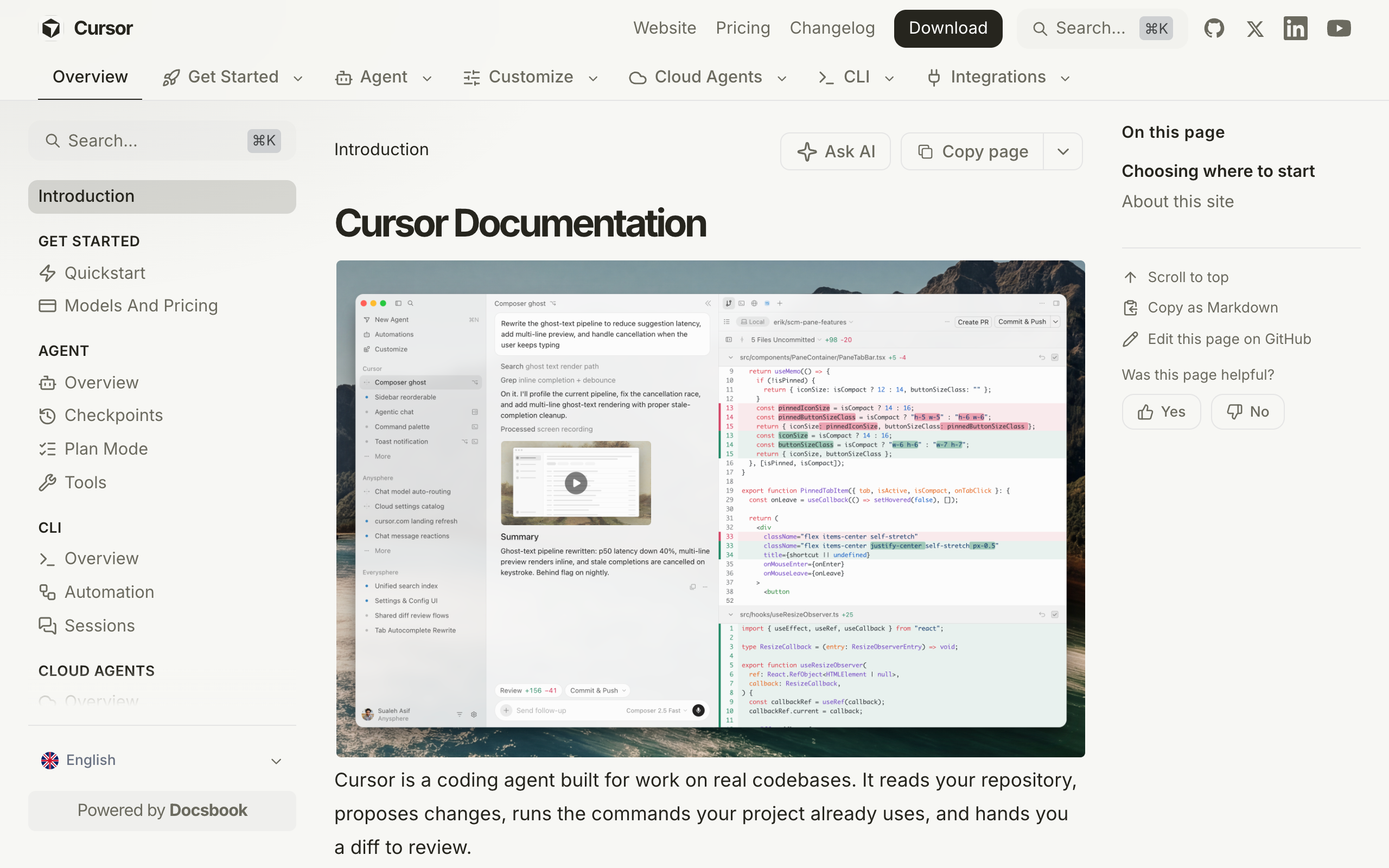 CursorDocumentation for the AI code editor
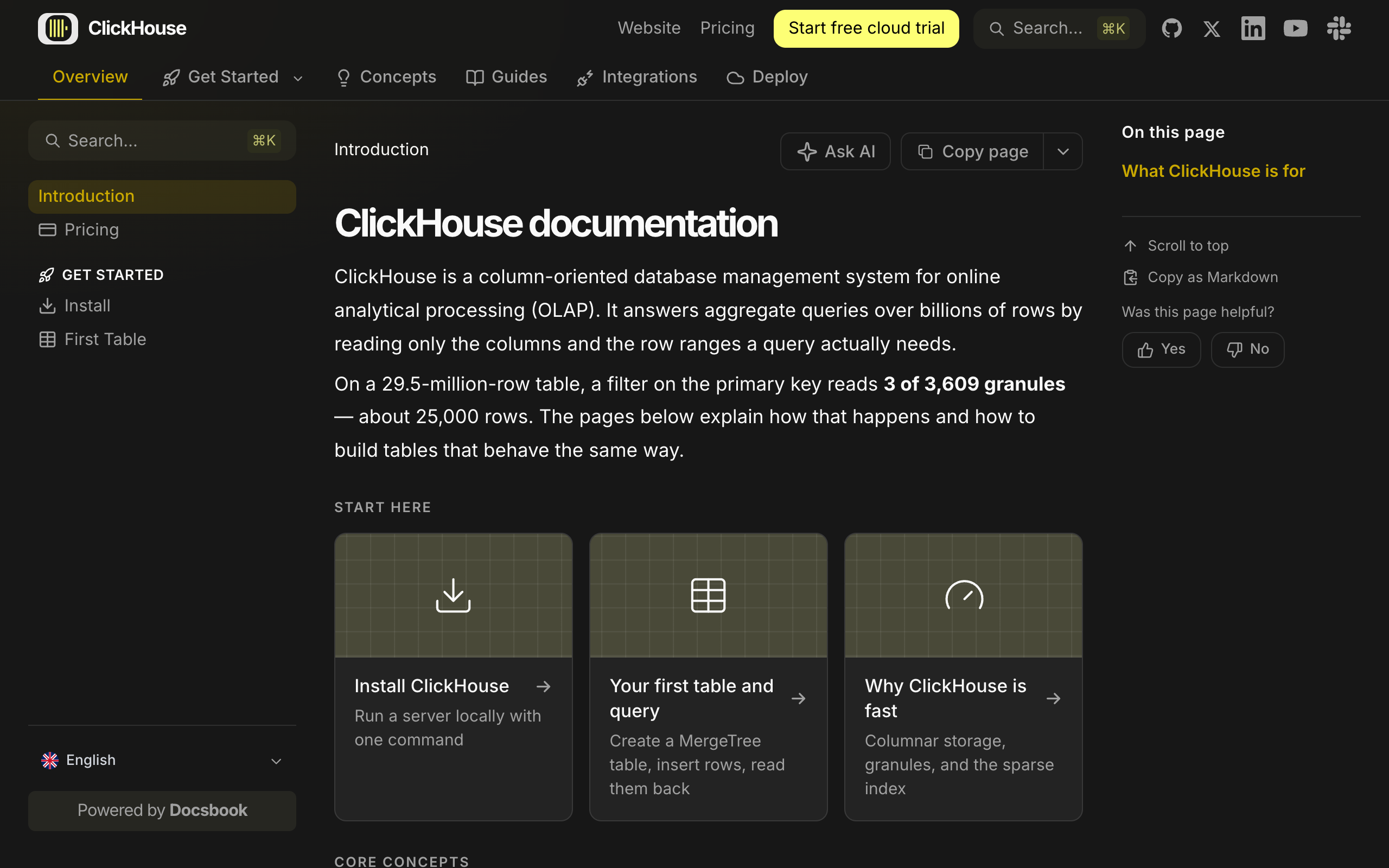 ClickHouseColumn-oriented database for real-time analytics
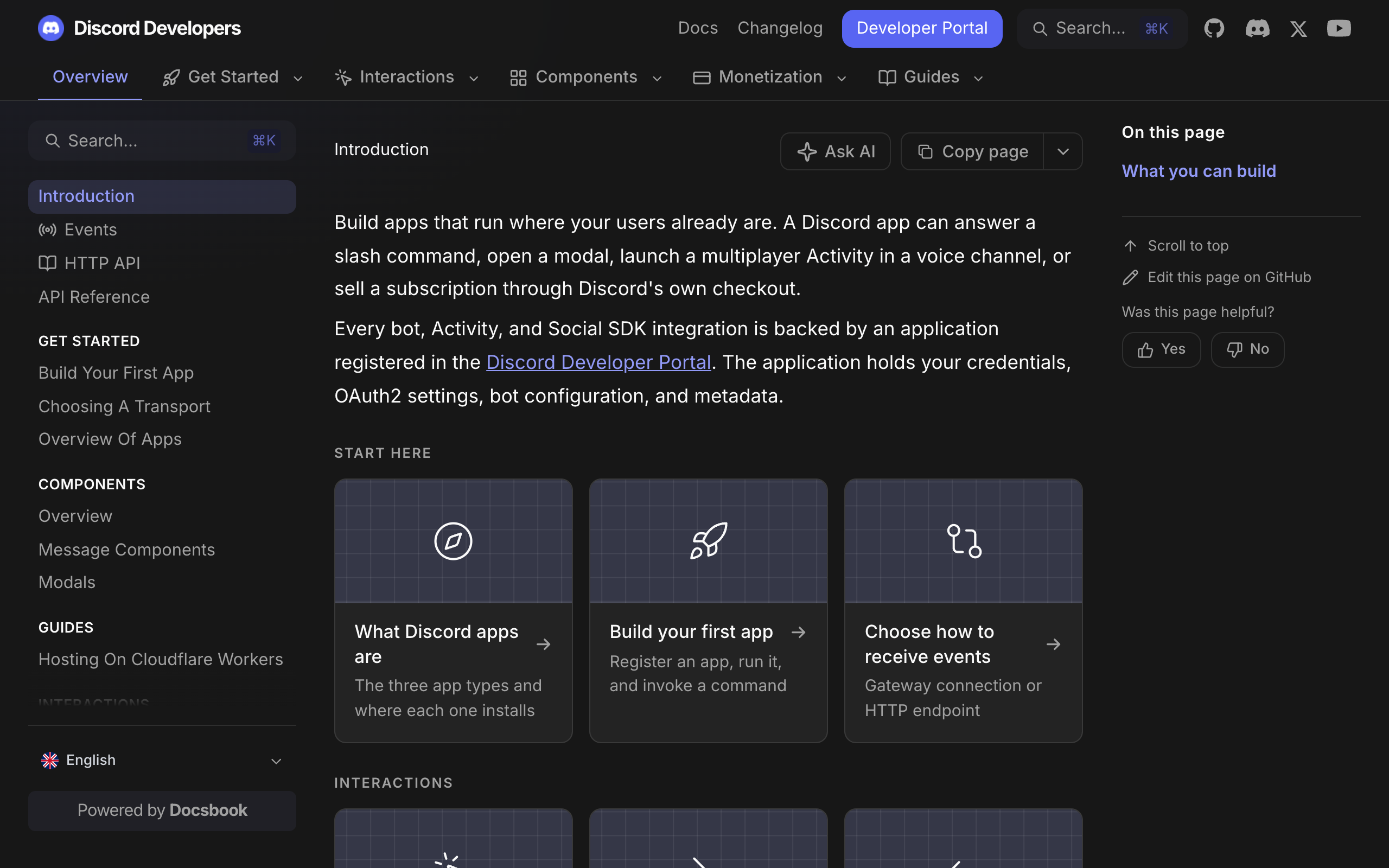 Discord DevelopersBuild bots, Activities, and apps on Discord
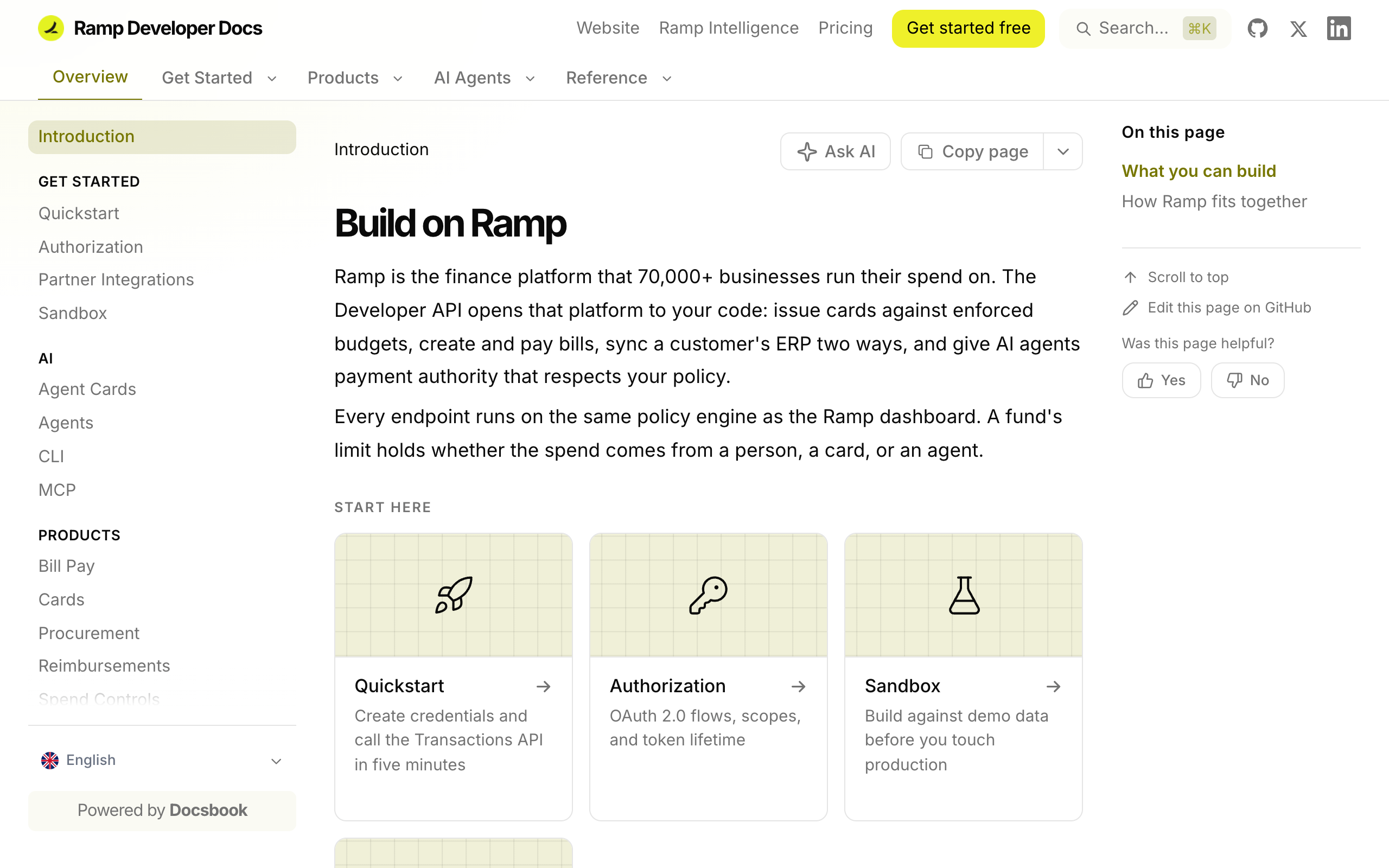 RampDeveloper API for the finance platform 70,000+ businesses run on
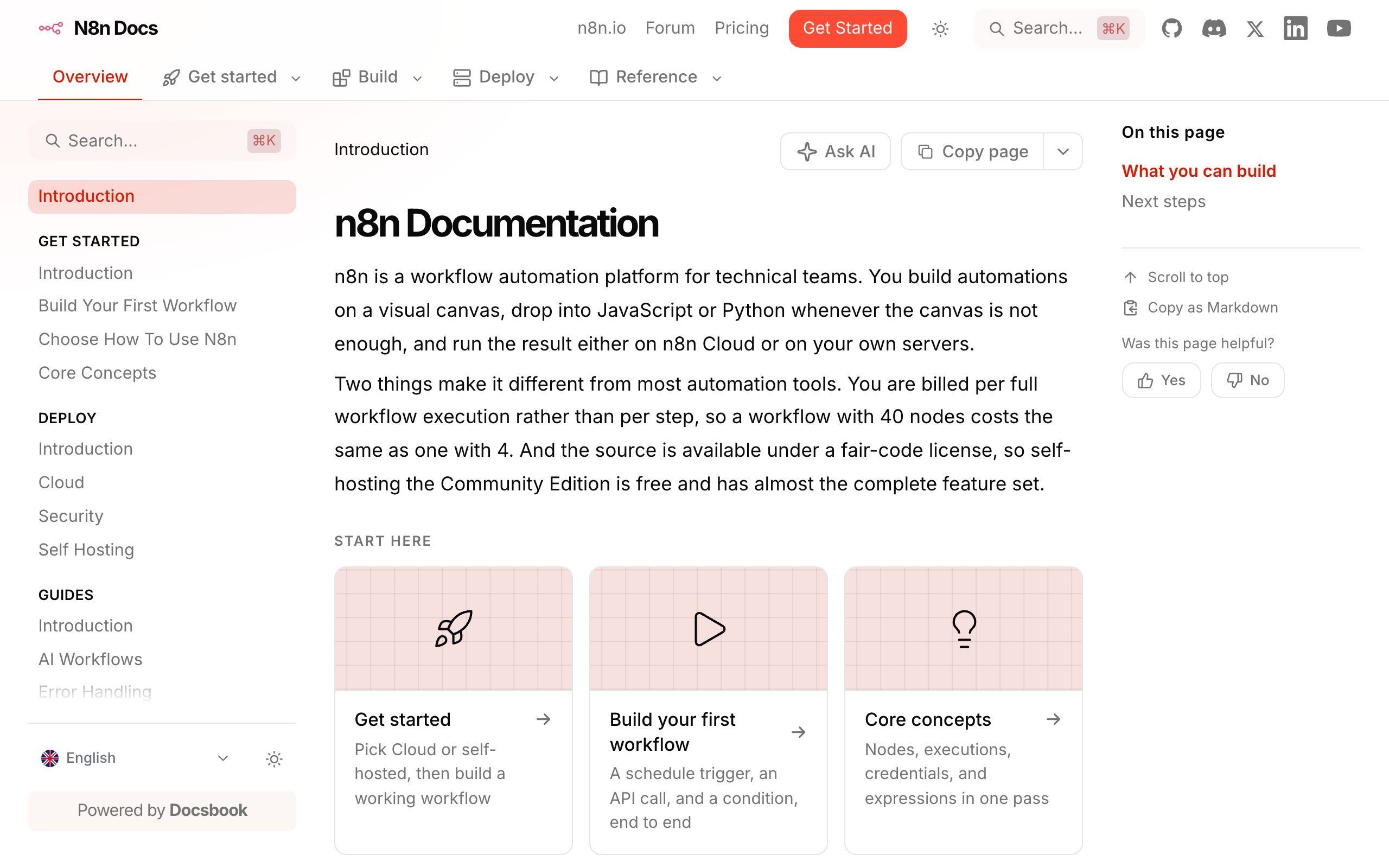 n8nWorkflow automation platform for technical teams
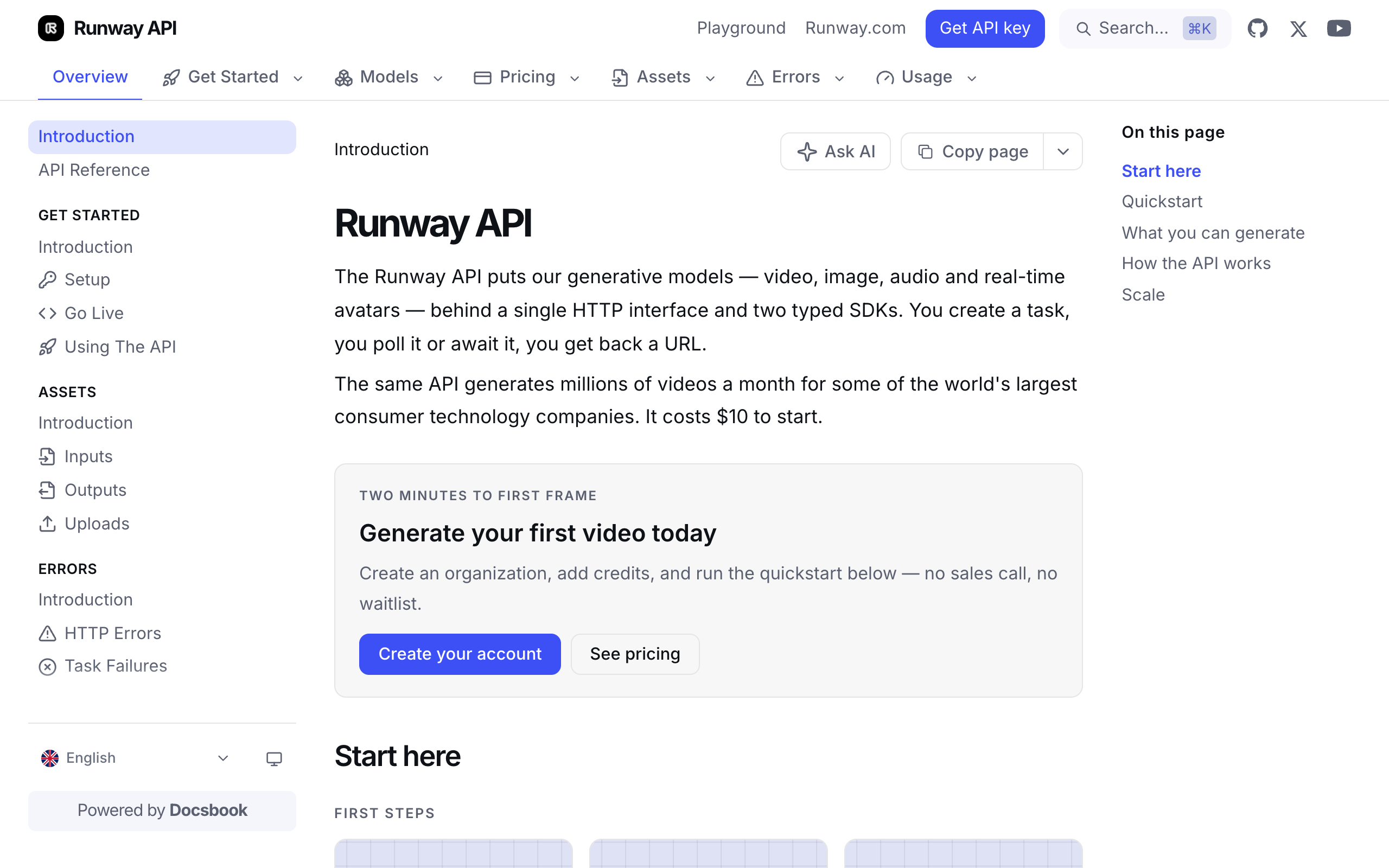 Runway APIGenerative video, image, and audio behind one HTTP API
See every site in the showcase →
Support: support@docsbook.io or the Docsbook Discord.
Ask one question and you get a researched answer about your own market — whether or not you ever run anything it suggests.